This is an interesting question – When I go to work, am I working or am I serving? I suspect some of us might consider that question through the filter of the type of work. Were we doing construction, masonry, landscaping or driving a rig cross country? Or were we analyzing spreadsheets, answering phone calls or emails, or leading meetings in an organization? All of those examples are worthy pursuits, but our society tends to put different weight on their importance or impact.
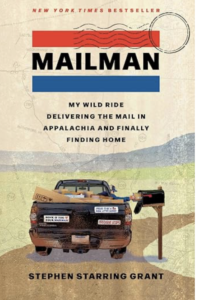
My view of this dichotomy about jobs, work or service, was recently challenged and worthy of further consideration. I just finished Mailman: My Wild Ride Delivering the Mail in Appalachia and Finally Finding Home by Stephen Starring Grant.1 I previously described the book as a delightful ride-along experience as Grant, during COVID, delivered the mail for a year after being laid off. His writing style has been described as “lyrical, descriptive, and honest” and I wholeheartedly agree. The numerous laugh-aloud sections made me smile, and his account of the real-life situations of his co-workers and postal patrons were spot on insightful. In other words, an honest telling of his experiences and his life. The oft-used salty language might make some readers blush but certainly adds a degree of authenticity.
At the end of his year of working for the US Postal Service and he returned to “ideas work, knowledge work,” he reflected on numerous aspects of his previous type of employment and compared them to his year just passed. Let me share some with you –
- Like my granny would often say, a man earns his keep by the sweat of his brow. But work does not define us as humans. What I had missed in my years of corporate life, the fundamental confusion I had labored under, was that work was reality. All of those years I had been working, the world went on. The sun on the clouds…the goodness of a decent lunch…the privacy of your thoughts…the love of your children…the great gift of being a father in a loving family…Being a mailman gave all of that back to me.
- His time during that year brought him back to the basics, basics that were there but too easily overlooked in a busy complex of work. It took the ups-and-downs of a new job, new tasks, new acquaintances and the ability to reconnect with the land of his youth for him to realize that his work was worthwhile, not mundane, and of value to many.
- I think the distinction between white-collar work and blue-collar work is a false one. Both forms of labor want all of your time and both exact a toll. One form is no more or less noble than the others.
- In my line of work, he reminds me that the custodian who cleans the OR, the scrub nurse who handles the instruments and the circulating nurse who monitors everything are on equal footing with the surgeon. All of those systems interact to perform a vital service, each person working diligently to maximize outcomes and minimize errors. Whether in the corporate suite, a retail outlet, a manicure parlor, roadside on a paving operation or in a restaurant, everyone is vital to their business, and the color of their collar is immaterial.
- By accident, I took a government job, a service job, midway through the journey of my life…[B]eing part of something…as mundane of the Postal Service, made me feel whole…. The real distinction is between work and service, and I think it’s one of the great dividing lines in American life. I wonder if part of how we’ve become so atomized is that while we all work, few of us serve. It is service that gives life meaning, and it is service to our community and our nation that gives the ideas of “community” and “nation” meaning as well…[I]f it were possible for everyone in their late forties or early fifties to do a year or two of service – a sort of AmeriCorps for the middle-aged – the country would be a more unified and civil place. Voting every four years does not create a common love of country. Service does.
- I listened to this section while on my morning walk and had to rewind it several times. I had to buy the book so I could continue to review these words and quote them appropriately. They are such a poignant reminder of our roles as citizens – caring about others, caring for others, sharing our common humanity.
- Without service, all that’s left of a town is real estate, parking lots for human souls and excess capital. Service creates belonging, and belonging makes us human.
- Indeed, this is the journey that I have been on since 1993 when I heard the clarion call of a health care futurist.2 “I am the problem, I am the solution, I am the resource” are the twelve words that define our roles of service for the issues in our communities. When we take ownership in the problems or areas of improvement in our communities, we work together to lift up everybody, not just some.

So, work without service is incomplete. Any line of work involves service to others. Our ability to recognize such and step up is so important. Work and service go hand in hand and are to be celebrated.
- Grant SS. Mailman: My Wild Ride Delivering the Mail in Appalachia and Finally Finding Home. 2025; Simon and Schuster. 285 pp.
- https://mychildrenschildren.com/my-childrens-children-name/