When I was a youngster and even into my adult years, employees were employees and bosses were bosses. As I entered the workforce over the years, I noticed a transition in labels. Employees became associates or even team members. Bosses became team leaders or even just team members. At first these changes seemed artificial to me and perhaps even hokey. Wasn’t the hierarchy still the same, I asked. Are these changes purely to build a false sense of comaraderie or do they actually reflect a tangible change in thinking and actions for a business?
It took me a long time to really appreciate the sentiment behind these changes. Forward-thinking businesses began to realize that to produce a product or to provide a service it takes a coordinated team at all levels of the operation and at multiple levels external to the operation. Every person and every part of a company or business enterprise needs to be invested in the operation and functioning at optimal levels for the product or service to be as good as possible. And there are often forces (suppliers, related services) outside the operation that exert an influence on the ability to produce products or provide services. We need only think back to the all the cars sitting on factory lots during the pandemic that were awaiting computer chips before they could be shipped to the car dealers.

So, teamwork and multiple systems are crucial to making things happen. One more analogy, a medical one. Multiple senior citizens, myself included, have had hip replacement surgery. The people and processes involved in those procedures are myriad – research, medical education, surgery training, nursing care, operating room personnel, surgical devices, operating room hygiene, operating room equipment, anesthesia, pharmacy, housekeeping, hospital engineering, physical therapy, patient transport. And I could make the list longer. Optimal results occur when all of these teams and their team members are working together in a clear, well-functioning compassionate manner. Again remember, “simple” hip replacement surgery was markedly delayed during the pandemic because not all of the factors listed above could be guaranteed to be safe. An orthopedic surgeon cannot fix a hip alone.
By the above example, it should be obvious that raising our children requires an incredible team of specific individuals, other related teams and processes in each of our communities and beyond – “The Pediatric Way.”1 The African proverb stating that “it takes a village to raise a child” implies that a local (or even broader) community of people need to work together along with a child’s parents to raise a child to their maximum potential. This proverb has been dismissed in some quarters as socialist poppycock or nonsense. I feel quite strongly that it indeed does take a village (along with the family) to raise a child and to deny that reality only prevents us even more from working together to improve our community and ourselves.
In my now home state of South Carolina, recent child well-being analyses (Annie E. Casey Foundation, Kids Count Data 2024) show a tremendous amount of work yet to be done – economic well-being, rank 40th out of 50; education 39th; health 46th; family and community 36th.2 Improvements in these rankings will only occur when we take seriously our role as fellow villagers (team members) to raise all of our children to be resilient and flourish.
Let me explain some of the components of what I mean by a “village”—
- Family—it goes without saying that families are the primary nurturers of children. Yet many families need assistance in so many ways that we need to able to provide that assistance. Well-nurtured children make good citizens.
- Medical care—families are not capable of independently providing medical care in today’s society. They rely on physicians, clinics and healthcare systems to lead the way. Many children and their families have adequate health insurance but far too many do not. Adequate health care for our children should not be an issue in our society, and I am embarrassed as a health care provider that so many children and families cannot access proper care. Healthy children make good citizens.
- Education—children absolutely require the best education possible. Education can open new avenues for advancement for all of our children, whether they are heading to the military, to the job market, or to an advanced degree. Education is also an obligatory tool to enhance parenting. Education should teach us tolerance for our fellow citizens and acceptance of the many ways that we are different yet really alike. Educated children make good citizens.
- Recreation—children need exercise, and our community needs to ensure that we have the proper vehicles for that—community centers, school programs, after-school programs, sport and non-sport recreational programs. Active children make good citizens.
- Law enforcement—our law enforcement system (properly trained and monitored) needs our full support. They need to able to adapt in a proactive (rather than a retroactive) manner to seek ways to improve our community. At the same time, we need to recognize that all the opportunities for improvement in our community are not somebody else’s responsibility. We have to take responsibility to tangibly improve our community. Law-abiding children make good citizens.
- Faith support—folks that are active in their religious organizations know that they have a responsibility to nurture all of the children of their church and beyond. In the families of various faiths, we should all work together. Faith should never be a barrier to helping children. Even those of no specific faith should recognize a higher calling to support others. Spiritually led children make good citizens.
The list above emphasizes ways that we are all inter-connected and need each other. This inter-connectedness is what makes us so successful at times when everything works together. This inter-connectedness also has the capability to tear us apart as a community, for when one system fails, the whole system is likely to fail.
Note the common thread above—children that are helped by different teams in our community can grow up to be good citizens and future team members. Without these inter-connected systems working together, we cannot make the progress that we need to improve the lives of our children, our lives and the life of our community.
I have to admit that I am scared of how the current political climate (the vitriolic divisiveness) is affecting our children. Programs that affect the well-being of children and their families (health services, mental health services, and education are at the top of this list) are being altered or cut back at a time when families with few means are struggling. The cutbacks will have the unwanted effect of making things worse. I quite frankly see a two-tiered system becoming more prominent than ever before. The folks with less means will become the folks with lesser means and poorer health going forward. To deny the fact that the most vulnerable in our society continue to suffer the most is to deny the plight of poverty for so many people.
When times get tough, our responsibilities to our children are even greater. Cutting back on services and resources and just hoping that children can pull themselves up “by their bootstraps” is just wrong and denies our role as a communal parent for all of our children and denies our role as a team member in these efforts. We cannot improve our lives and the life of our community if we don’t take personal responsibility for everything that happens in our community related to our children.
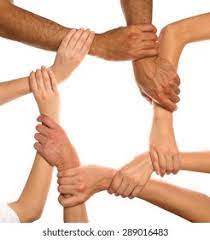
It really does “take a village to raise a child” that can contribute to the overall well-being of our community now and in the years ahead. We need to make that village as strong and vibrant as possible. We are all on the same team.