I continue to be obsessed with the prominence of hate in our society. I have previously written about hate 1-3 and described it as a toxic sticky substance that is very difficult to get rid of. And when most of us are confronted with sticky substances in our homes, we look for some type of solvent to dissolve it and wipe it away. These solvents can accomplish a singular task but if we are not careful, the toxic sticky substance might return and need further application of a solvent for eradication. Hate has become pervasive in our society without any signs of abating. In the current us vs. them environment, it is far too easy to just resort to the quick dismissive, “I hate [him/her/them”], to express displeasure.
While the issue of hate is difficult to avoid, I found myself encountering an unlikely narrative about hate in a book that was recommended to me by a bookstore clerk. Stephen Starring Grant’s book, Mailman: My Wild Ride Delivering the Mail in Appalachia and Finally Finding Home, provides the reader with a delightful ride-along experience as he, during COVID, delivered the mail for a year after being laid off.4 His writing style has been described as “lyrical, descriptive, and honest” and I wholeheartedly agree. The numerous laugh-aloud sections made me smile, and his account of the real-life situations of his co-workers and postal patrons were spot on insightful. In other words, an honest telling of his experiences and his life. The oft-used salty language might make some readers blush but certainly adds a degree of authenticity.
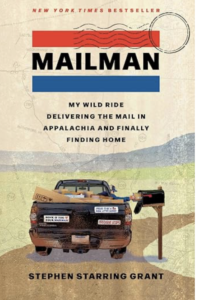
One passage in the book, while discussing the handling of mail-in ballots in the 2020 election, struck me as quite perceptive and worthy of my review as someone who is trying to understand hate and seek the appropriate solvent. Let me repeat the paragraph below and add some comments –
Real hate requires either psychological distance or inescapable intimacy. In the worst of cases, it combines both. Here we are, all of us in the same country, inescapably intimate with the fellow citizens of our shared republic. Here we are, all of us sorted into groups where we hold each other at arm’s length, naked with uniformed disgust. I’ve always found hate alarmingly easy to access, a physical experience that comes from inside us. Hate justifies violence and inspires violent action. Hate immediately divides people into the hater and the hated. Hate does not recognize institutions, except to hate them too. Hate sees only groups and individuals, never systems; history only has value as a pretext for more hate.
- The concept of real hate brings to light the blurred lines of hate. On one level, it can be directed outward to “them.” Or it can be directed toward those closest to us and tear at the fabric of our families and friends. In reality, the distinction between these two levels is murky at best.
- We are too easily sorted into groups and artificially labeled when in fact we are all members of this republic and fellow humans.
- The violence emanating from hate is the horrific manifestation of allowing hate to be so pervasive.
So, what is the solvent? I am still drawn to the words of Abraham Lincoln in his Second Inaugural Address – “with malice toward none, with charity for all” as we seek to move forward in our lives and the lives of others. A concerted effort to embrace each other, recognizing our common humanity, allows for us to have targeted “dislikes.” We can look on these dislikes as opportunities for improvement. When we hate, we are closed to rational discourse – we are right, and they are wrong.
I am also convinced that certain qualities are necessary going forward as we strive to practice empathy and accept our common humanity.5
- Truth-telling and truth-seeking
- Trust-building and trust-seeking
- Supporting science
- Practicing civility
- Embracing diversity
- Being faithful to one’s faith
My continued plea. Drop the word “hate” from our vocabulary and actions. This is not easy, and I slip up many times. But I pledge to do better. Let’s allow for room to improve how we interact and treat each other. Let’s take the toxicity of hate out of our lives and the lives of our children.

If empathy and love are the antidotes to hate, we still need tools (solvents) to accomplish the task of eradicating its toxic sticky presence. Truth, trust, science, civility, diversity and faith are giant steps in the right direction.
- https://mychildrenschildren.com/rethinking-hate/
- https://mychildrenschildren.com/hate-negates-kindness/
- https://mychildrenschildren.com/hate-and-fear-enemies-of-children/
- Grant SS. Mailman: My Wild Ride Delivering the Mail in Appalachia and Finally Finding Home. 2025; Simon and Schuster. 285 pp.
- https://mychildrenschildren.com/what-matters/